
'India is an equity market with a breadth and depth of companies to invest in.'

'Your decisions should not be driven by your view on the market, but by your objectives, risk appetite, and time horizon.'

Data released earlier by CAG shows capital expenditure by the Centre had contracted 9.2 per cent in Q2

The comments come a day after Fitch Ratings had warned the setback for the Congress party in recent state elections could imperil the fiscal deficit target by tempting the government to have less restraint on spending.

Ahead of the 2023-24 Union Budget, the thinking at the top level of the central government is clear: Gross domestic product (GDP) growth of 6-6.5 per cent is a comfortable enough target for FY24 and the focus should be on fiscal consolidation to ensure that the sovereign cost of borrowing does not become prohibitively expensive in a high-interest rate environment, according to people in the know. Those aware of deliberations between the Prime Minister's Office (PMO) and the Ministry of Finance said while the Budget would look to strike a balance between infrastructure investment and welfare schemes, it is unlikely to be populist, though it will be the last full-year Budget before the 2024 Lok Sabha election. Incidentally, 6-6.5 per cent GDP growth is what the upcoming 2022-23 Economic Survey is expected to project for FY24.

Lower crude oil costs and higher marketing margins are expected to raise the fortunes of oil marketing companies (OMCs) in the first quarter (Q1) of 2023-24 (FY24), while city gas distribution (CGD) companies could also benefit from lower spot prices of liquefied natural gas (LNG). However, in a break from the past, growth trends are expected to diverge for various segments within the broad energy sector. Analysts expect the earnings from gas production to go down for upstream national oil and gas companies such as Oil and Natural Gas Corporation (ONGC) and Oil India (OIL) due to the introduction of the new domestic gas pricing regime on April 1. After showing steep losses over the first half of 2022-23 (FY23), the marketing margins of OMCs have steadily recovered in four months.

West Bengal was the second-most industrialised state in terms of value added and first in terms of number of factories and employment even in the mid-1960s. With a severe and long process of deindustrialisation, it lost its primacy.

India's economy grew by 6.3 per cent in the second quarter of the current fiscal, official data released on Wednesday showed.
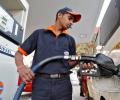
Global oil prices have slumped and India has access to larger amounts of discounted Russian crude oil, yet refiners are not passing on their savings to consumers
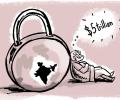
India decisively withstood global headwinds in 2023 and is likely to remain as the world's fastest-growing major economy on the back of growing demand, moderate inflation, stable interest rate regime and robust foreign exchange reserves. Despite widespread pessimism witnessed among the developed nations and the worsening geopolitical situation, India recorded a gross domestic product (GDP) expansion of 6.1 per cent in the March quarter. The growth moved up to 7.8 per cent in the June quarter and was 7.6 per cent in the September quarter. For the first six months of this fiscal, the growth was 7.7 per cent.

The RBI is understood to be dithering since it would want more clarity on the cost of the fiscal policies the new government would undertake before it decides to cut rates, even though it has pencilled in a lower gross domestic product growth rate for this fiscal year.

There's a straightforward relationship between economic activity and power consumption. If economic activity increases, so does power consumption. Since the latest GDP (gross domestic product) data indicates India's growth rates exceeded expectations in the second half if the 2022-23 financial year (H2FY23) and GDP estimates of FY24 are strong, we would expect power consumption to rise as indeed it has. There is also a direct relationship between power consumption and National Thermal Power Corporation or NTPC's results since the public sector undertaking (PSU) is the largest power generator in India.
The finance minister's vow to contain the deficit means there will be little room ahead of a tough election to spur growth.
The Prime Minister's Economic Advisory Council warned of serious fiscal risks from growing off-Budget liabilities, which are estimated at 5 per cent of gross domestic product in 2008-09. This would be much more the budgeted central government deficit of 2.5 per cent of GDP for the year.
Gujarat's success story deserves all the credit that good performance demands. However, the credit for it owes to economic reforms and the entrepreneurial tradition of Gujarat, say Sonali Ranade and Shaelja Sharma

In Jan the country raised the import tax on the yellow metal by 2 percentage points.

Rationalisation of income tax slabs, infrastructure status for digital services and incentives to hydrogen storage as well as fuel cell development were some of the suggestions made by various stakeholders at the pre-Budget consultation meeting convened by Finance Minister Nirmala Sitharaman. The customary pre-Budget consultation meetings were held with the finance minister virtually between December 15 and December 22, as per the finance ministry statement. More than 120 invitees representing seven stakeholder groups participated in eight meetings, scheduled during this period, it said.
Gross deficit of states to fall to 2.8% by March: RBI.

The appointment comes at a time when the ministry is struggling to rein in the fiscal deficit at the targeted level of 5.3 per cent of gross domestic product for the current financial year.

Those who like to draw comfort from the fact that UP is the country's third-largest state in terms of the size of its economy should also note that its growth rate is one of the lowest, its per capita income is almost half of the national average and its poverty rate at 30 per cent places it at the twentieth rank among all the states, says A K Bhattacharya.
The strategy to achieve the target would be to maximise revenue collections and control expenditure, Chidambaram said, while seeking support of the political parties to deal with economic and financial problems facing the country.

'I found it unbelievable that L&T said 45,000 jobs were waiting to be filled because of unavailability of suitable skillsets.' 'So, when the Opposition sweepingly says there are no jobs, I'm sorry... I'm not saying it's raining jobs, but there are jobs. The (skill) gap has to be bridged.'

India has allocated Rs 1.72 trillion, or 27.67 per cent of the total defence budget to cater to modernisation of the country's arsenal. Modern militaries spend up to 50 to 60 per cent of their total defence budget so that they go into combat with superior weaponry and equipment.

Capital expenditure by 54 large central public sector enterprises and five departmental arms, having a capex minimum target of Rs 100 crore, rose 93 per cent year-on-year (YoY) in the April-May period to Rs 1.39 trillion. The National Highways Authority of India (NHAI) and the Railways have started this financial year's capex cycle on a stronger note. In the first two months of FY24, the 54 CPSEs, along with the departmental arms, achieved 19 per cent of their combined budget target of Rs 7.33 trillion, Business Standard has learnt.
Emerging economies will take the centre stage in terms of GDP (PPP) growth by 2020.
India's present growth is not a sign of economic prowess; it is a choice most countries do not make because the concurrent high inflation typically targets the poor, says Derek Scissors.

Policymakers should aspire to restore the pre-Independence environment where the rupee was trusted and used all over South Asia, in Southeast Asia, in West Asia, and in East Africa, suggests Ajay Shah.

As traders obsessively follow US presidential elections, expect a surge in case of a change of guard in the Oval Office.
MoSPI showed Maharashtra as the state with the least economic growth in 2011-12.
Pakistan faces an "education emergency" that costs the economic equivalent of its flood disaster every year, a new education campaign has warned. The March for Education campaign, launched with the British government's backing, deploys stark statistics to draw a picture of a chronically ill education system in Pakistan, The Guardian reports.

Now that the economy is growing at a higher-than-expected rate, it is time to accelerate the pace of fiscal consolidation, and the Budget could be a good starting point, argues Rajesh Kumar.

The country's gross domestic product (GDP) is expected to grow at around 18.5 per cent with an upward bias in the first quarter of the current financial year, according to SBI research report Ecowrap. This estimate is lower than the Reserve Bank of India's GDP growth projection of 21.4 per cent for the April-June quarter. "Based on our 'Nowcasting' model, the forecasted GDP growth for Q1 FY22 would be around 18.5 per cent (with upward bias)," the report said. Higher growth in Q1 FY22 is mainly on account of a low base.
The recession scare is back with the United States' economy plunging into another grave crisis.

Vasundhara Raje may have had her faults but she is an unconventional and brave leader who deserves better, observes Aditi Phadnis.

Reminiscent of the past two years, the market has made positive strides ahead of the Union Budget 2023-24 (FY24). The benchmark National Stock Exchange Nifty has gained 1.8 per cent in the last month. Typically, markets tend to gain ahead of the Budget as investors build in optimism.
All the newspapers and business news channels on Monday morning told us that the world is now going to change again. But these very guys had no clue till a few days back, and were gung ho about the Indian economy, the Sensex and pretty much everything else.
'They have since only tried to improve systems. Also, with regulatory guidance from time to time, we are in a position to assess a situation and react in time.'
Maharashtra's economic survey for 2002-03 says the state's economy was expected to grow at a lower rate of four per cent as against 6.8 per cent in the previous fiscal.

Public sector banks require Rs 2.40-lakh crore.

Corporate India at present is more indebted than all state govts put together.
